Transform your outdoor space with expertly designed landscape lighting. Discover how uplighting techniques can dramatically enhance your property, turning ordinary trees into stunning focal points. This guide provides you with the knowledge to illuminate your landscape effectively, creating captivating light and shadow effects.
Understanding Landscape Lighting

What is Landscape Lighting?
Landscape lighting involves the strategic use of outdoor lighting fixtures to illuminate landscape features, enhancing their beauty and functionality. The right lighting system can transform your outdoor space, creating a well-lit and inviting environment. Effective landscape lighting design considers various factors, including the type of landscape, desired lighting effects, and types of trees present, to ensure proper lighting and optimal visual impact.
Benefits of Outdoor Lighting
Outdoor lighting offers numerous benefits, enhancing both the aesthetic appeal and functionality of your property. Proper lighting improves safety by illuminating pathways and potential hazards. It also extends the usability of your outdoor space into the evening, making it perfect for entertaining or relaxation. Accent lighting can highlight beautiful trees and water features, adding visual interest and increasing the overall value of your home, thereby creating a well-lit environment.
Key Lighting Techniques
Mastering key lighting techniques is essential for effective landscape lighting design. Combining different techniques allows for a balanced and visually appealing illumination, enhancing the overall look and highlighting landscape features with strategic light distribution. The following table summarizes two key lighting techniques:
| Technique | Description |
|---|---|
| Uplighting | Positioning light fixtures at the base of a tree to illuminate the trunk and canopy, creating a dramatic effect. |
| Downlighting | Mimics natural moonlight, casting gentle light from above. |
Uplighting Techniques for Trees
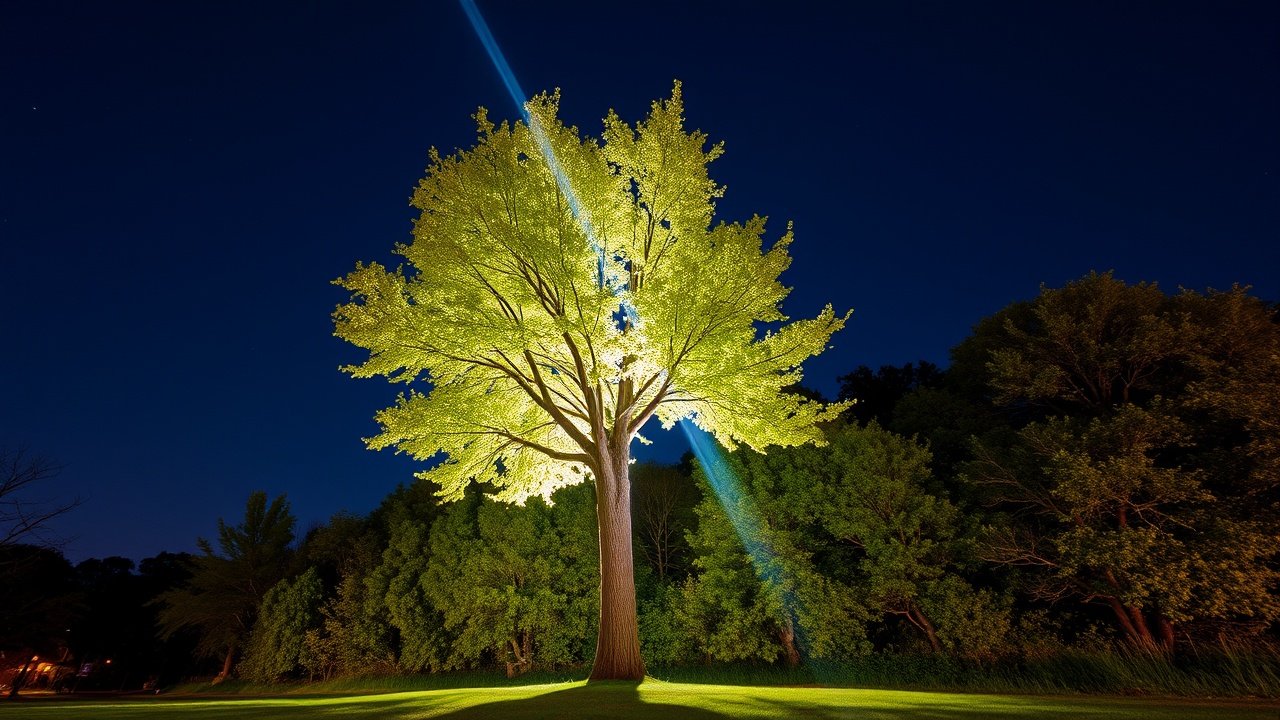
What is Tree Uplighting?
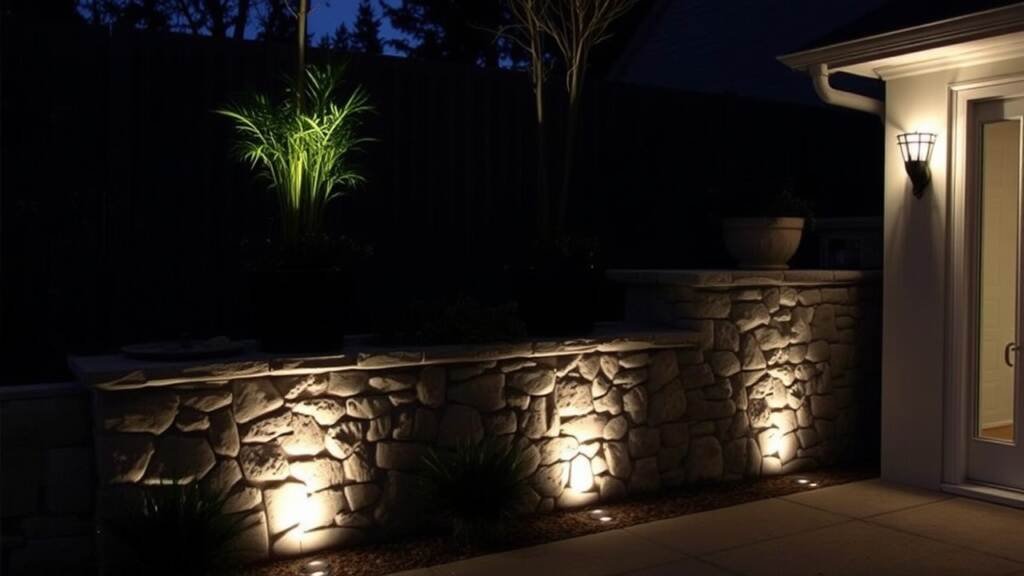
Tree uplighting is a lighting technique used in landscape lighting design to illuminate trees from the base of the tree upwards. This technique creates a dramatic light and shadow effect, turning trees into a focal point in your landscape. By strategically positioning light fixtures at the base of the tree, you can accentuate the trunk and canopy, adding depth and visual interest to your outdoor space. Uplighting trees not only enhances the aesthetic appeal of your landscape but also creates a well-lit and inviting atmosphere.
Choosing the Right Fixtures
Selecting the right lighting fixture is crucial for effective tree uplighting. Consider the size of the tree and the desired lighting effects when choosing your outdoor lighting fixtures. Large trees require more powerful uplights with a wider beam angle to illuminate the entire canopy, while smaller trees may need only a low lumen spotlight. Ensure the fixture is durable and weather-resistant, capable of withstanding outdoor elements. LED fixtures are an excellent choice due to their energy efficiency and long lifespan. It’s important to keep the wattage LED in mind when uplighting a tree to achieve the proper lighting effect.
Placement Strategies for Effective Uplighting
Strategic placement of light fixtures is key to achieving effective tree uplighting. Position uplights at varying distances from the base of the tree to create different lighting effects. For a dramatic effect, position the light fixture close to the trunk, highlighting the tree’s texture. For a broader illumination, position the light fixture further away to widen the beam spread. Consider the types of trees; deciduous trees may require adjustments in lighting during different seasons. Experiment with uplighting and downlighting to balance light distribution and enhance the tree’s look in your landscape.
Highlighting Trees with Accent Lighting
Importance of Highlighting Trees
Highlighting trees with accent lighting is pivotal in elevating your landscape’s aesthetic value. By strategically using uplighting and other lighting techniques, you can transform ordinary trees into stunning focal points. This enhances the visual appeal of your outdoor space and creates an inviting, well-lit environment. Highlighting trees also adds depth and dimension to your yard, making it appear more spacious and appealing, especially when using proper lighting to illuminate beautiful trees.
Accent Lighting Techniques
Accent lighting techniques involve using light fixtures to accentuate specific tree features. Besides uplighting trees, consider spotlighting unique branch structures or using downlighting to mimic natural moonlight. Path lighting can complement tree illumination, guiding the eye towards these focal points. Experiment with different beam angles and lumen outputs to achieve the desired effect. Remember to consider the size of the tree when choosing your lighting system and the appropriate wattage LED.
Combining Uplighting with Other Techniques
For a balanced and captivating landscape, combine uplighting with other lighting methods. Integrating uplighting and other techniques can create a more dynamic effect.
| Lighting Method | Effect |
|---|---|
| Uplighting and Downlighting | Provides a layered effect, enhancing the look from multiple angles. |
| Path Lights | Guide visitors and complement the illumination. |
This approach creates a cohesive design, accentuating various landscape features while ensuring safety and functionality. Consider the type of landscape lighting you need and how it integrates with your outdoor space.
Incorporating Water Features in Landscape Lighting
Benefits of Lighting Water Features
Lighting water features can dramatically enhance your landscape, adding a serene and elegant touch to your outdoor space. Properly illuminated fountains, ponds, or waterfalls become stunning focal points, creating a tranquil and inviting atmosphere. The soft glow of underwater lights can highlight the movement of water, adding visual interest and depth to your garden. Thoughtful lighting design can transform your water features into captivating nighttime attractions, making them a focal point.
Techniques for Illuminating Water Features
Several techniques can illuminate water features effectively. Submersible light fixtures can be positioned underwater to create a soft, glowing effect. Spotlights can highlight specific elements, such as waterfalls or sculptures. Uplighting can be used to illuminate surrounding plants, creating a harmonious visual balance. Choose fixtures designed for underwater use, ensuring they are waterproof and safe. Consider the size of the trees around the water features to choose the proper lighting.
Creating a Cohesive Landscape Design
To achieve a cohesive landscape design, ensure your lighting complements both trees and water features. Use similar lighting styles and color temperatures to create a harmonious look. Position light fixtures strategically to balance light distribution across your outdoor space. The goal is to create a unified and inviting environment that enhances the beauty of your entire property. Choose the right lighting fixture and consider types of trees and size of the tree to create a well-lit outdoor space.
- Lawn Edging Ideas: Landscape Edge Style Guide
- The benefits of sustainable landscaping for modern homes
- Core Aeration vs Spike Aeration: Which Lawn Aeration Method Should You Choose?
- Lawn Care Service List: Landscape & Lawn Maintenance Options
- Mulching Leaves: A Smarter, Eco-Friendly Alternative to Manual Leaf Cleanup