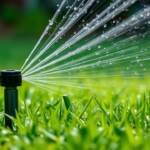
Is standing water plaguing your lawn after every rainfall? Discover effective yard drainage solutions to manage water and protect your property. Say goodbye to soggy spots in your yard and hello to a healthy, vibrant landscape.
What is Yard Drainage?
Understanding Standing Water
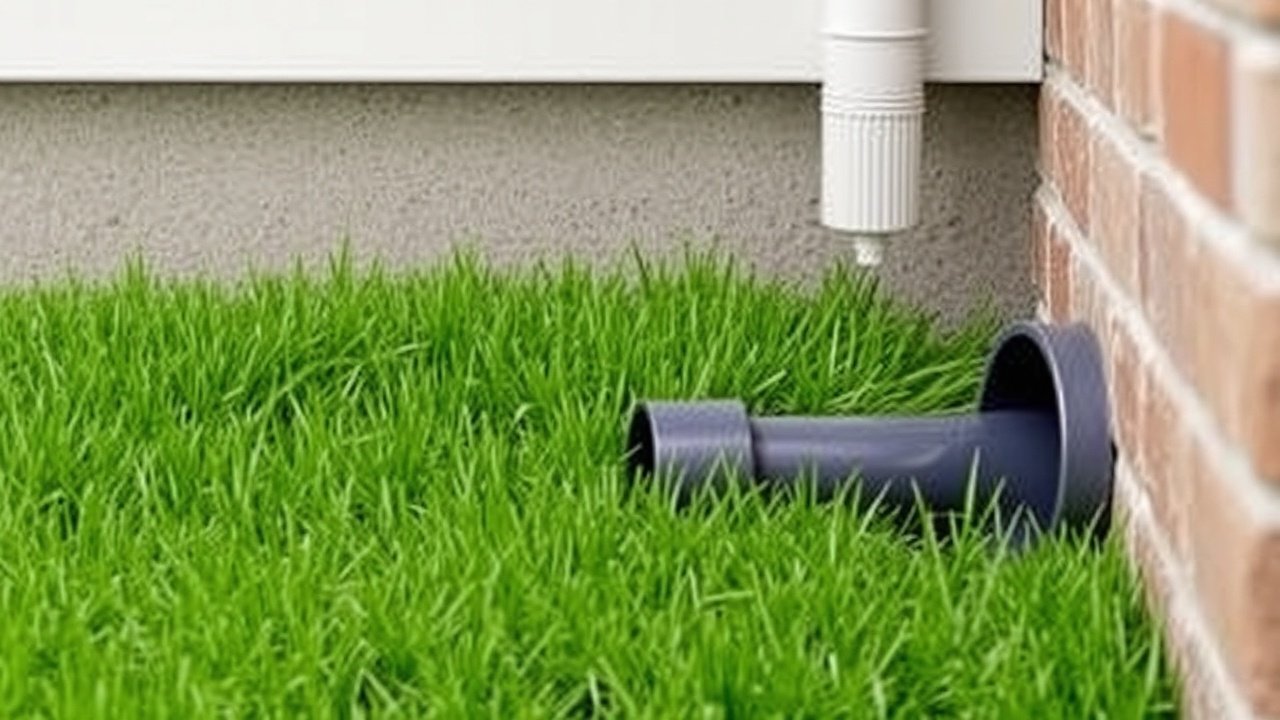
Standing water refers to the accumulation of surface water on your lawn or garden that doesn’t drain away promptly. This water pooling can occur due to various factors and indicates that the natural water flow is being impeded, resulting in persistent dampness. This is a common water problem for many homeowners.
Common Causes of Water Accumulation
Several factors can contribute to standing water issues. Here are some common causes:
- Clay soil, which doesn’t drain well.
- Low spots in your yard that naturally collect water.
- Improper slope, excessive runoff, and a high water table.
Compacted soil that prevents water from being absorbed also contributes.
Importance of Effective Drainage
Effective yard drainage is crucial for preventing excess water from damaging your property. It ensures that water is properly channeled away from your home, protecting your foundation and preventing structural issues. A good drainage system also prevents soil erosion and promotes healthy plant growth. Effective drainage will prevent water from destroying your garden.
Why Yard Drainage Matters for U.S. Homeowners
Impact on Property Value
Poor yard drainage can negatively impact property value in the U.S. Persistent standing water can lead to foundation damage, soil erosion, and an unattractive lawn. Investing in yard drainage solutions can enhance curb appeal and protect the structural integrity of your home, maintaining or increasing its value.
Health Hazards of Standing Water
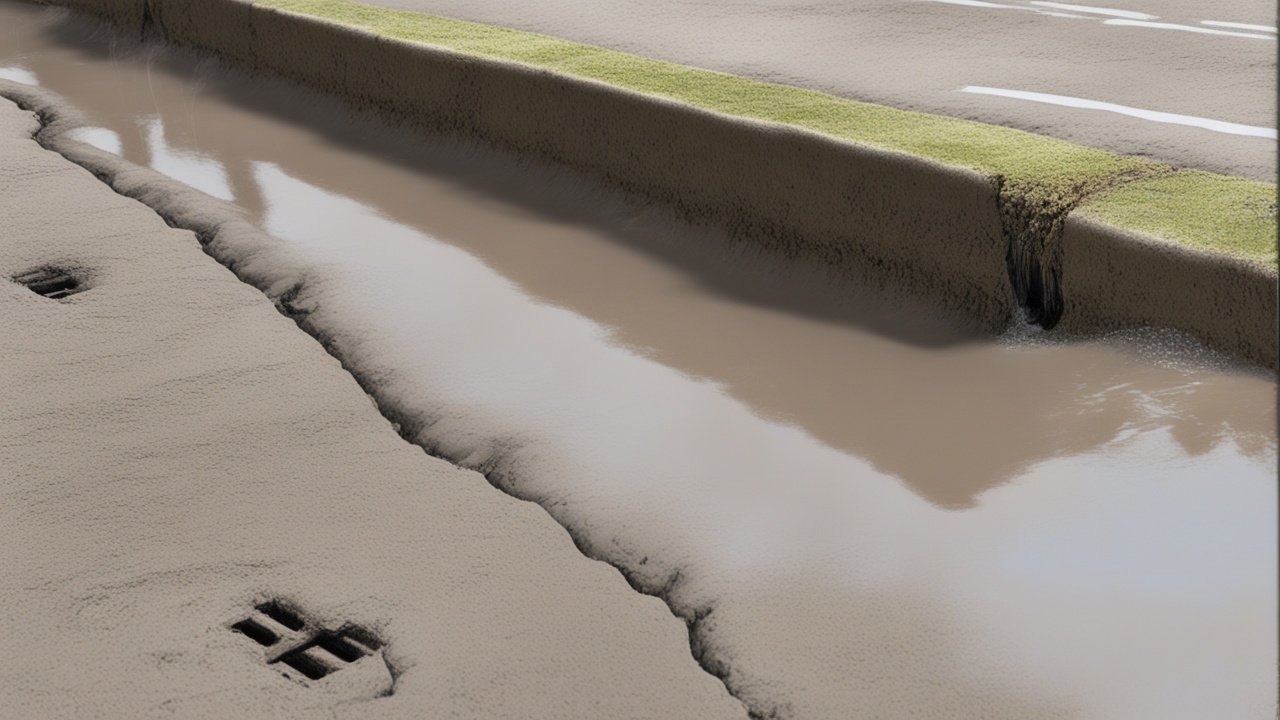
Standing water poses several health hazards for American homeowners. It creates breeding grounds for mosquitoes, which can transmit diseases like West Nile virus and Zika virus. Mold and mildew thrive in damp environments, triggering allergies and respiratory issues. Effective yard drainage helps mitigate these risks.
Environmental Considerations
Effective yard drainage contributes to environmental stewardship. By managing runoff and preventing soil erosion, it protects local waterways from pollutants. Solutions like rain garden and rain barrel can collect water and allow water to slowly absorb water, reducing storm drains and helping to recharge the water table.
Benefits of Proper Drainage
Improved Lawn Health
Proper yard drainage solutions are essential for improved lawn health. When excess water accumulates due to poor drainage, it creates an environment conducive to fungal diseases and root rot. By effectively directing water away, a functional drainage system ensures that the grass receives adequate oxygen and nutrients, leading to a healthier, more vibrant landscape, preventing spots in your yard.
Enhanced Aesthetic Appeal
Effective yard drainage significantly enhances the aesthetic appeal of your property by eliminating standing water in your yard. Water pooling can lead to unsightly puddles, muddy areas, and the deterioration of garden features. By ensuring proper water flow and preventing water in your yard, your lawn remains lush, green, and visually appealing, increasing curb appeal.
Increased Usability of Outdoor Spaces
With effective yard drainage, your outdoor spaces become more usable and enjoyable. Standing water can render portions of your lawn unusable, making it difficult to host gatherings or engage in outdoor activities. By addressing drainage issues and preventing standing water, you ensure that your yard remains a functional and inviting area for relaxation and recreation. Proper water management makes all the difference.
Common Problems & How to Avoid Them
Identifying Trouble Spots in Your Yard
Identifying trouble spots in your yard is the first step in addressing drainage issues. Look for areas where water pools after rainfall, low spots in your yard where water collects, and areas with consistently soggy soil. These are clear indicators that you need to manage water with an effective yard drainage solution to remove standing water from your landscape. Make sure to check slope of land.
Preventing Water Pooling
To prevent water pooling in your yard, several steps can be taken. These include actions related to managing water flow and improving soil drainage, such as:
- Regrading your yard to promote proper water flow.
- Installing a french drain or dry creek bed to channel runoff away from your home.
- Aerating your lawn regularly to improve soil drainage and allow water to absorb more effectively.
Understanding High Water Tables
A high water table can exacerbate drainage issues, making it difficult for water to drain naturally. In areas with a high water table, consider installing a french drain system to direct water away from your property and into a storm drain. Planting water-tolerant species and adding organic matter to your soil can also help improve drainage and prevent water from becoming a persistent water problem.
Step-by-Step Guide to Managing Water
How to Install a French Drain
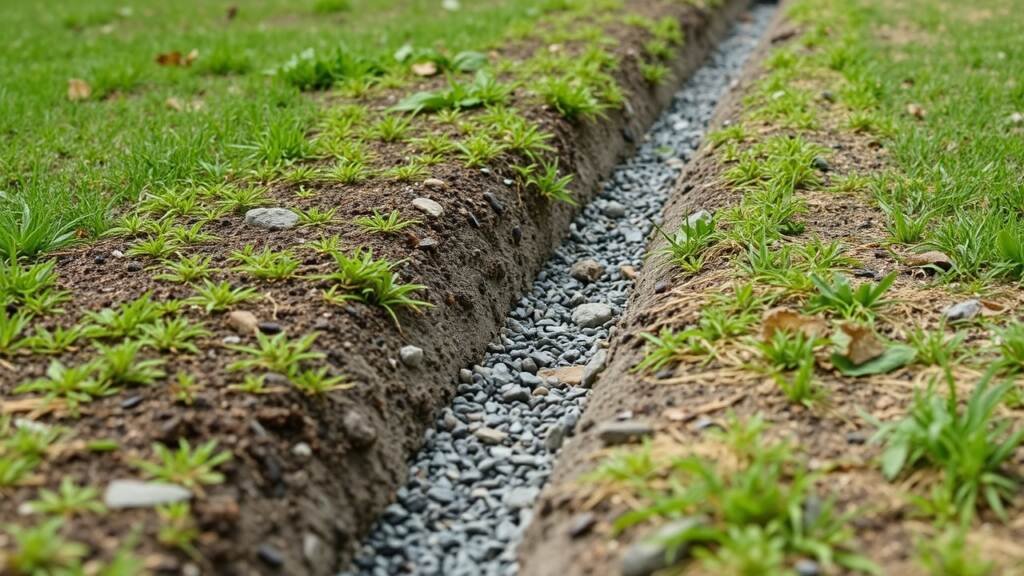
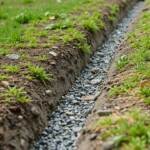
Installing a french drain is an effective method to manage water and prevent standing water. The installation process involves several key steps:
- Digging a trench with a slight slope and lining it with filter fabric.
- Adding a layer of gravel and placing a perforated pipe on top.
- Covering the pipe with more gravel, and wrapping the filter fabric over the top to prevent water from making spots in your yard.
Aerating Your Lawn
Aerating your lawn involves creating small holes in the soil to improve drainage and allow water to absorb water more effectively. Use an aerator to create these holes, which help break up compacted soil and facilitate water flow. Aerating is particularly beneficial for clay soil, as it enhances the soil’s ability to drain and reduces water pooling, preventing drainage issues and spots in your yard.
Creating a Dry Creek Bed
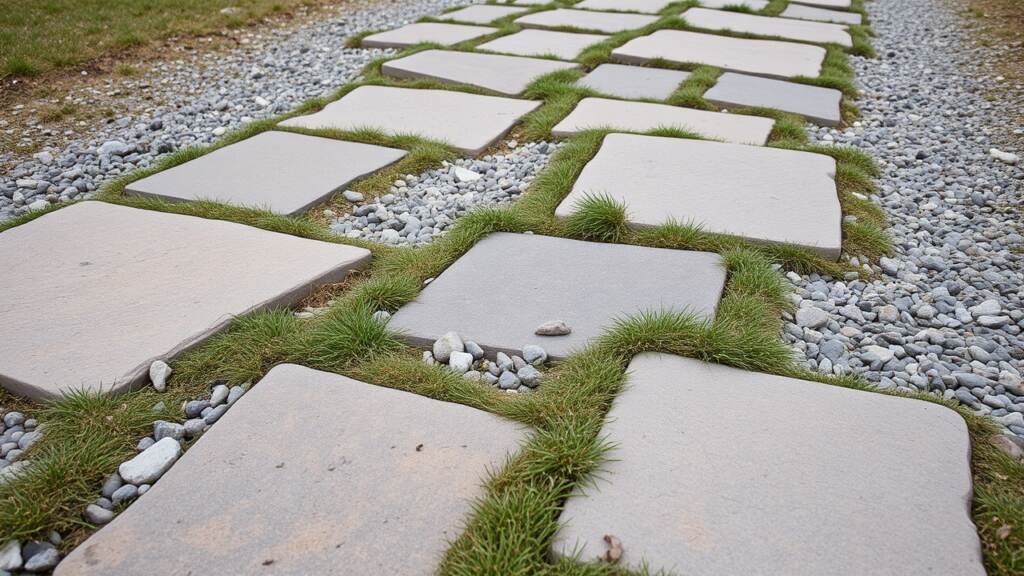
Creating a dry creek bed is a decorative and functional solution for drainage issues. Design a winding channel in a low spot of your yard, line it with landscape fabric, and fill it with rocks and gravel. This helps channel runoff away from your home during heavy rains, preventing water pooling and erosion, while adding visual interest to your landscape, and preventing water from damaging the lawn.
Best Plants and Materials for Yard Drainage
Choosing the Right Plants for a Rain Garden
Selecting the right plants for a rain garden is crucial for its effectiveness. Choose native species that thrive in both wet and dry conditions. Plants like irises, sedges, and rushes are excellent choices for absorbing water, reducing runoff, and enhancing the beauty of your garden, while collecting water effectively. This helps manage water away from the foundation.
Effective Use of Rain Barrels
Using rain barrels is an eco-friendly way to collect water and reduce runoff. Place rain barrels under downspouts to capture rainwater from your roof, which you can then use to water your garden or lawn. This not only conserves water but also reduces the amount of water entering storm drains, mitigating drainage issues and preventing water from damaging the landscape.
Materials for DIY Yard Drainage Solutions
For DIY yard drainage solutions, essential materials include gravel, perforated pipe, filter fabric, and landscape fabric. These materials are perfect for constructing french drains, dry creek beds, and other drainage systems. Additionally, adding organic matter to your soil can improve its ability to absorb water and drain, preventing standing water in your yard and related problems.
Cost Guide for Yard Drainage Solutions
Estimating Installation Costs
Estimating the installation costs of yard drainage solutions involves considering factors such as the size of your yard, the type of drainage system needed (like a french drain or rain garden), and whether you opt for DIY yard drainage or professional services. Costs can range from a few hundred dollars for simple fixes to several thousand for extensive systems. The main objective is to remove standing water.
DIY vs. Professional Services
Deciding between DIY yard drainage and professional services depends on your budget, expertise, and the complexity of the drainage issues. DIY yard drainage can save money on labor costs, but it requires time, effort, and a good understanding of drainage system principles. Professional services offer expertise and ensure proper installation, but at a higher cost.
Long-term Savings from Effective Drainage
Investing in drainage systems provides long-term savings. By preventing foundation damage, soil erosion, and the need for frequent landscaping repairs, you avoid costly future expenses. Additionally, a well-drained lawn is healthier and more aesthetically pleasing, enhancing your property value. Effective water management protects your lawn around your home.
Before and After: Real Examples
Case Study: Transforming a Low Spot
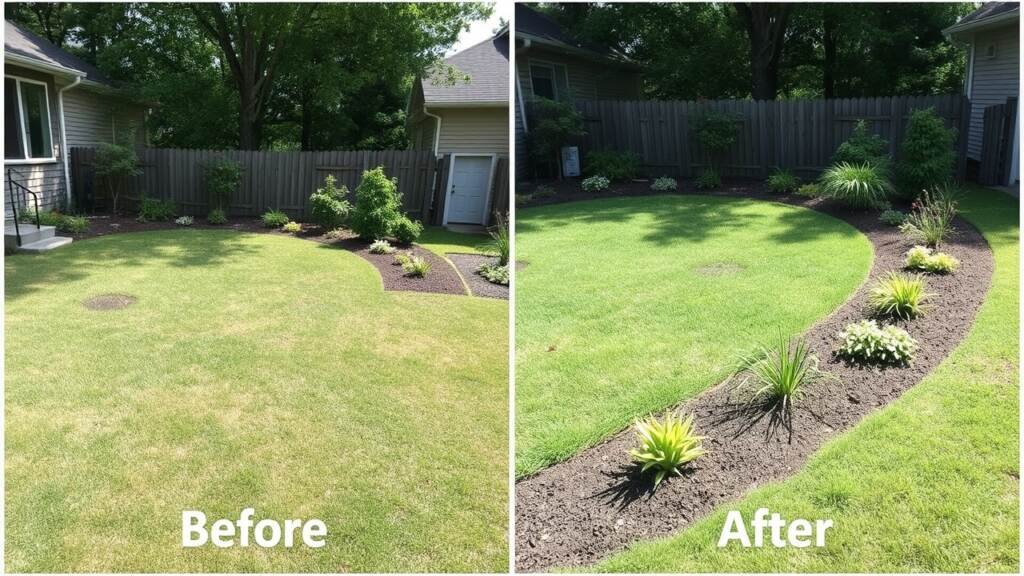
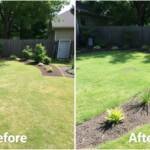
Consider a real-world example where a homeowner struggled with a persistent low spot in your yard that pooled standing water after every rain. By strategically installing a french drain, the runoff was effectively channeled away from the home, transforming the soggy area into a usable and attractive part of the landscape. This simple yard drainage solution resolved the drainage issues and enhanced the property’s appeal.
Before and After Yard Drainage Solutions
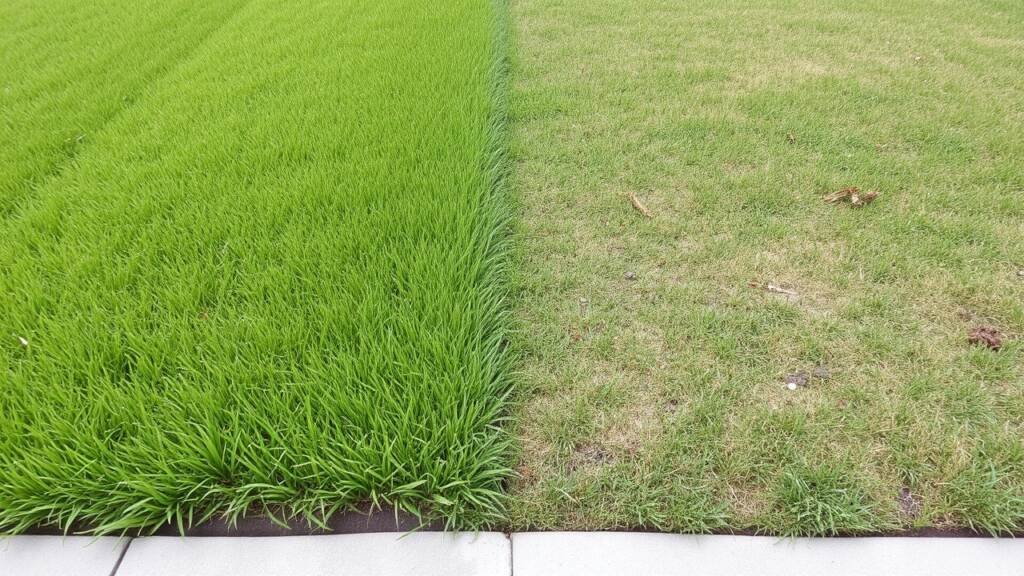
Before implementing yard drainage solutions, properties often exhibit spots in your yard, soil erosion, and an unattractive lawn. After implementing yard drainage solutions such as rain gardens or dry creek beds, the landscape transforms into a lush, healthy, and visually appealing space. The elimination of standing water not only improves aesthetics but also protects the property’s structural integrity by directing water away from the foundation.
Homeowner Testimonials
Homeowners often share their positive experiences with yard drainage solutions, noting significant improvements in their lawn health and overall property value. Many appreciate the reduction in mosquito populations and the elimination of muddy areas, making their outdoor spaces more enjoyable. These testimonials highlight the tangible benefits of addressing drainage issues and effectively managing standing water in your yard.
Tips From Landscaping Professionals
Best Practices for Yard Drainage
Landscaping professionals emphasize the importance of proper slope and soil composition for effective yard drainage. They recommend aerating your lawn regularly, incorporating organic matter to improve soil structure, and strategically placing drainage systems such as french drains. Regular maintenance and inspections can also prevent minor drainage issues from escalating into major problems that cause water pooling.
Common Mistakes to Avoid
One common mistake is neglecting to address clay soil, which naturally impedes drainage. Another is failing to properly slope your lawn or choosing inappropriate plants for wet areas. Overlooking the importance of regular maintenance, such as clearing debris from drains and downspouts, can also lead to drainage issues and cause standing water in your yard. Effective water management is an ongoing effort.
Seasonal Maintenance Tips
Seasonal maintenance is crucial for ensuring optimal yard drainage. In the fall, clear fallen leaves and debris from drainage systems to prevent clogs. In the spring, check for signs of erosion and repair any damaged areas. During heavy rain seasons, monitor low spots in your yard for standing water and take corrective actions as needed. Adjusting your approach to the water table helps prevent water.
FAQs About Yard Drainage
What Causes Standing Water in My Yard?
Standing water in your yard is typically caused by a combination of factors, including clay soil, low spots in your yard, improper slope, and compacted soil. These conditions impede water flow and prevent water from effectively absorbing water into the ground. Addressing these underlying issues with appropriate yard drainage solutions is essential for eliminating drainage issues and preventing water.
How Can I Tell if I Need a Drain?
You likely need a drainage system if you consistently observe water pooling on your lawn after rainfall, experience soggy soil conditions, or notice erosion or foundation issues. Other signs include a musty odor in your basement, an increase in mosquito populations, and the presence of mold or mildew. These indicators suggest that excess water is not being managed effectively.
Are DIY Yard Drainage Solutions Effective?
DIY yard drainage solutions can be effective for minor drainage issues. Simple fixes like aerating your lawn, adding organic matter to the soil, and creating a dry creek bed can significantly improve water flow. However, for more complex problems such as a high water table or extensive low spots in your yard, professional yard drainage services may be necessary to ensure a lasting solution.